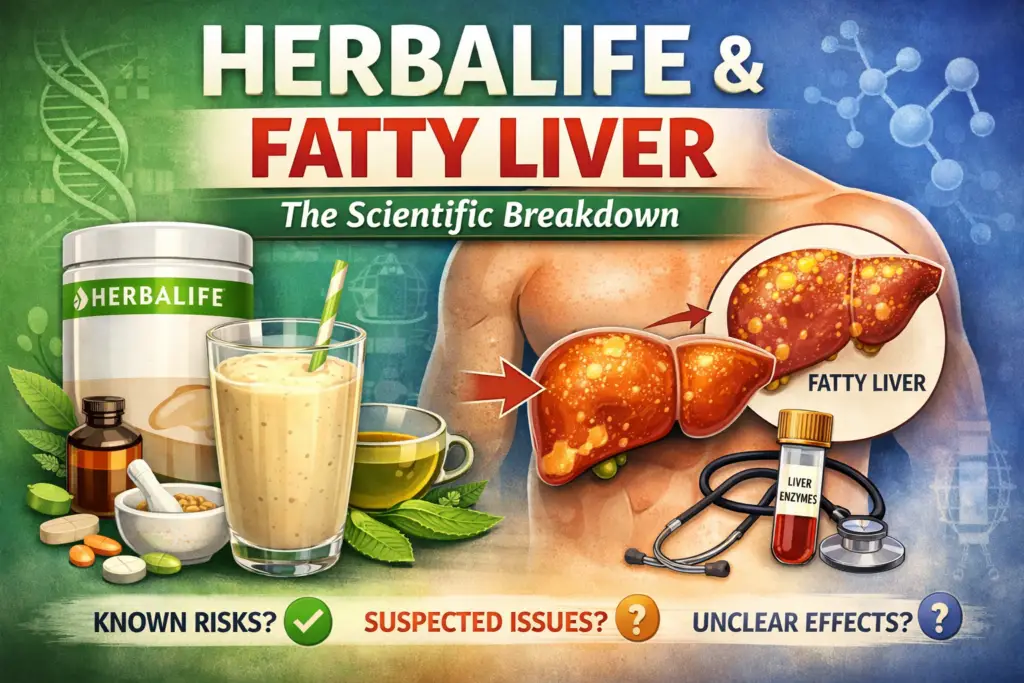
Herbalife & Fatty Liver:
The Scientific Breakdown
If you are navigating a diagnosis of Non-Alcoholic Fatty Liver Disease (NAFLD), you face a dilemma. Weight loss is the cure, but are meal replacement supplements safe? We analyze the data from peer-reviewed medical journals to separate indirect benefits from direct risks.
The “Weight Loss” Mechanism
The primary drivers of Fatty Liver Disease are excess body weight and insulin resistance. According to the AASLD Guidelines, there is a specific “Gold Standard” target for reversing liver damage.
Key Takeaway
Herbalife products create a calorie deficit, leading to weight loss. If you hit the 7-10% target, liver health improves. However, this is due to the weight loss itself, not special ingredients. Whole foods achieve the same result.
Target Weight Loss for Efficacy
Clinical data suggests a 7-10% reduction in total body weight is required to significantly reduce liver fat and inflammation.
The Risk: Hepatotoxicity
While weight loss is beneficial, specific herbal supplements have been linked to liver injury. For over a decade, medical journals have documented cases of chemical-driven liver damage in otherwise healthy individuals.
Documented Case Locations
Reports are not isolated to one region. Studies from multiple countries have flagged liver injury associations.
Symptom Severity Spectrum
Symptoms range from mild biological stress markers to critical life-threatening conditions.
Ingredient Sensitivity
High doses of extracts like Green Tea Extract (catechins) can be toxic to the liver in concentrated form, despite being healthy as a beverage.
Contamination
Concerns have been raised historically regarding bacterial or heavy metal contamination in specific production batches.
The “Cocktail” Effect
Taking multiple proprietary supplements simultaneously can overwhelm the liver’s metabolic capacity to process compounds.
Marketing Myths vs.
Medical Reality
Navigating the claims can be dangerous. Here is what distributors say versus what Hepatologists (liver specialists) know.
Marketing Claim
“These products detox and cleanse your liver.”
Marketing Claim
“It’s natural, so it’s safe for everyone.”
The Scientific Truth
The “Detox” Myth
The liver is a self-cleaning organ. It does not need a powder to “detox.” Medical professionals consider “detox” a marketing term, not a biological reality.
The “Natural” Fallacy
“Natural” does not mean safe. Hepatologists advise patients with existing liver conditions to avoid proprietary herbal blends entirely, as compromised livers are highly susceptible to toxin-induced injury.
Summary & Recommendations
1. Do Not Self-Medicate
What works for a healthy person’s weight loss might be dangerous for a compromised liver. Avoid assumptions.
2. Consult a Specialist
Show the product label to a Hepatologist. They check for hepatotoxins like Niacin or concentrated extracts.
3. Choose Whole Foods
The safest path to the 7-10% weight loss goal is a diet of vegetables, lean proteins, and complex carbs.
Sources: Journal of Hepatology (2007), AASLD Guidelines, Spanish DILI Registry.
Disclaimer: This infographic is for informational purposes only and does not constitute medical advice.